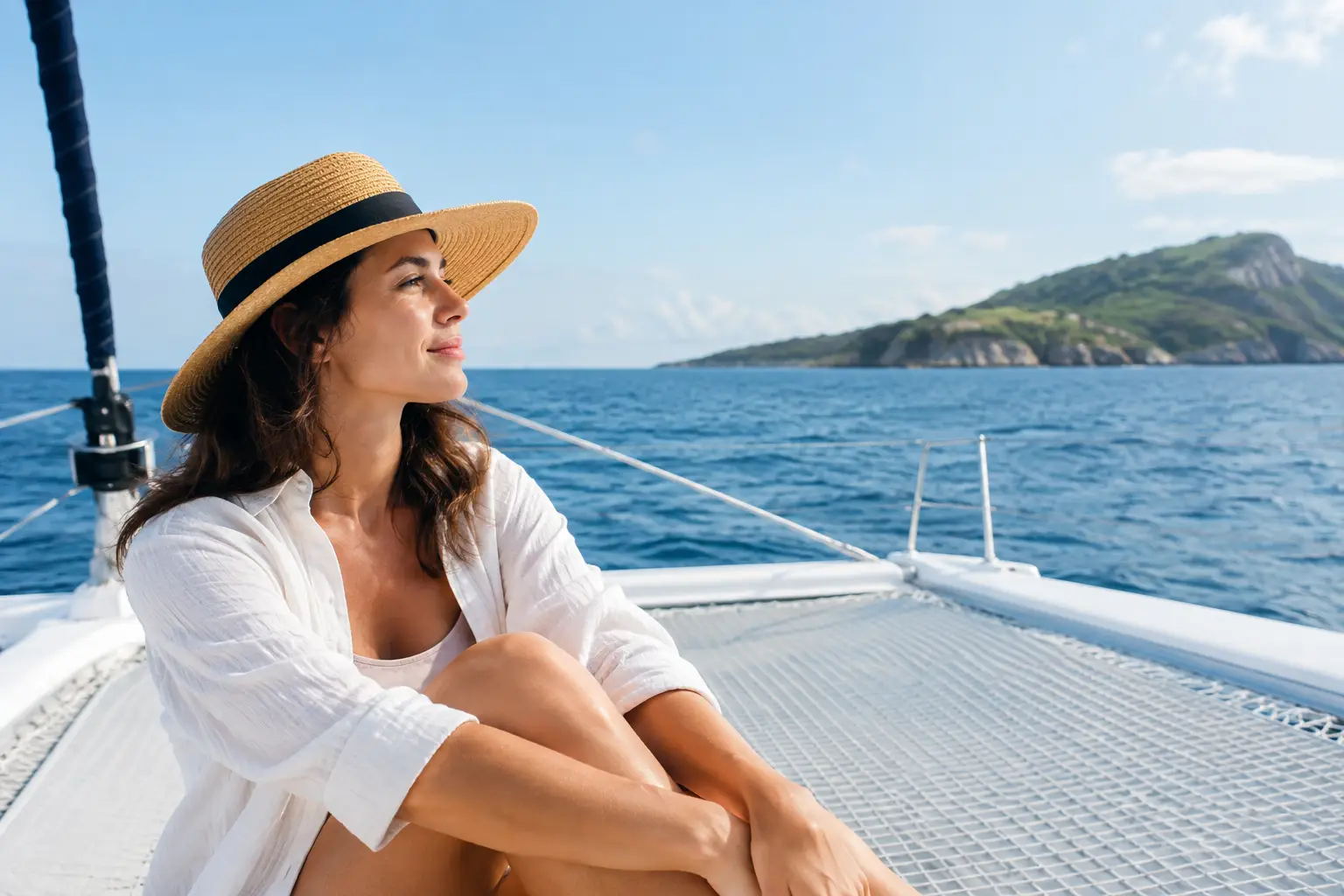
The first toast of a private catamaran day should be to the water, the view, and the people you came to celebrate with – not to surviving an upset stomach. The good news is that most guests can avoid seasickness on catamaran cruises with a little planning before departure and a few smart choices once on board. In Cancun and the Riviera Maya, a well-chosen route, a comfortable vessel, and attentive crew service can make all the difference.
A catamaran is often one of the more comfortable ways to enjoy the Mexican Caribbean, especially for guests who are not regular boaters. Its two-hull design creates a broad, stable platform for relaxing, dining, swimming, and taking in the coastline. Still, no boat is completely motion-free. Wind, wave direction, weather, your own sensitivity, and even whether you skipped breakfast can affect how you feel.
Why Catamarans Usually Feel More Comfortable
Compared with many single-hull boats, catamarans tend to roll less from side to side because of their wide stance on the water. There is more outdoor space to move around, more fresh air, and more room to choose a comfortable seat. That makes them an excellent fit for families, couples, and celebration groups who want a relaxed private cruise rather than a tightly packed group-tour experience.
But stability is not the same as immunity. A catamaran may still pitch forward and back in choppy conditions, particularly when traveling into the wind or crossing open water. The goal is not to assume motion will never happen. It is to set up your day so your body has the best possible chance of enjoying it.
How to Avoid Seasickness on Catamaran Cruises Before You Board
Your best prevention starts on land. The evening before your charter, get a full night of sleep and go easy on alcohol. A late night, dehydration, and a heavy breakfast can leave even normally comfortable travelers feeling off once the boat begins to move.
Eat something light before departure. Think fruit, toast, eggs, yogurt, or another simple meal that gives you energy without sitting heavily in your stomach. Going out completely hungry is not ideal either. An empty stomach can make nausea worse for some guests, especially in the heat.
Hydration matters more than many travelers expect. Cancun sunshine, pool time, travel days, and celebratory drinks can all contribute to dehydration. Start drinking water well before your pickup or marina arrival, then continue with water throughout the charter. If your group plans to enjoy cocktails, alternate each drink with water and pace yourself in the first part of the cruise.
If you know you are prone to motion sickness, speak with your doctor or pharmacist before your trip about appropriate options. Some guests use over-the-counter motion-sickness medicine, while others prefer doctor-approved patches or remedies. Many medications work best when taken before symptoms begin, but they can cause drowsiness or interact with other prescriptions. Follow the label and professional medical advice rather than trying something new without preparation.
Natural options can be useful for mild sensitivity, although results vary from person to person. Ginger candies or tea, acupressure wristbands, and peppermint may help some travelers feel more settled. They are not a substitute for medical guidance when you have a known history of significant motion sickness, but they can be easy additions to your day bag.
Choose the Right Time and Route for Your Group
A private charter gives you an advantage that large, fixed-schedule excursions cannot always offer: more flexibility. When comfort is a priority, tell your charter concierge that someone in your party is concerned about seasickness. The team can help guide you toward a catamaran, departure point, duration, and itinerary that suit the conditions and your group’s preferences.
Morning charters are often appealing because guests are rested, temperatures are gentler, and winds may be lighter. That said, the best time depends on the season and the day’s forecast. An experienced captain makes the final operational decisions based on real conditions, and a route that is beautiful on a calm day may be adjusted when wind or waves build.
Protected waters and shorter transit times can be especially helpful for first-time boaters. Isla Mujeres routes, coastal cruising, snorkeling stops, and beach-focused itineraries may offer different comfort levels depending on where you depart and the weather. If your group wants a full day on the water, choosing an itinerary with time to swim, float, and relax at anchor can break up travel time and help everyone reset.
This is where personalized planning is more valuable than simply booking the largest boat available. A four-hour celebration cruise may be ideal for one group, while another may prefer six or eight hours with a slower pace, a protected stop, lunch, and plenty of shade. VIP Cancun Yachts can coordinate the details around your comfort level, from transportation timing to the charter experience itself.
Where to Sit When the Water Gets Active
Once underway, fresh air is your friend. Stay outside if possible, look toward the horizon, and give your eyes a stable point to focus on. Reading, scrolling on your phone, or staring down at photos can create a mismatch between what your eyes see and what your inner ear feels. That mismatch is a common trigger for seasickness.
The center of the boat is generally the best place to sit because it experiences less motion than the very front or rear. On a catamaran, ask the crew where they recommend sitting that day. They know how the vessel is moving in current conditions and can direct you to a shaded, comfortable spot with good airflow.
Avoid spending unnecessary time in enclosed cabins if you already feel uneasy. A cool interior can be welcome, but the lack of horizon view and reduced airflow may make nausea feel stronger for some people. If you need a break from the sun, take one, then return to fresh air once you feel ready.
What to Do at the First Sign of Nausea
Do not wait until you feel miserable. The earliest signs can be subtle: warmth, fatigue, a mild headache, extra saliva, or the feeling that you would rather sit very still. Let the crew know right away. Professional crews are used to assisting guests discreetly and can offer water, crackers if available, a cooler position, and practical guidance on where to sit.
Keep your movements slow and purposeful. Sit upright, face forward when possible, breathe steadily, and keep your eyes on the horizon. Sip water rather than gulping it. Avoid rich foods, strong fragrances, and more alcohol until you feel normal again.
For many people, a few minutes of fresh air and horizon focus is enough to stop mild discomfort from becoming a bigger problem. If it does not improve, the captain and crew can assess the situation and adjust the experience when conditions and safety allow. Your comfort is never an inconvenience on a private charter.
Small Details That Protect a Great Day
Pack for comfort, not just photos. Sunglasses reduce glare and eye strain, while a hat and reef-safe sunscreen help prevent overheating. Bring a light layer if you tend to get chilled by sea breeze after swimming. Motion sickness can feel worse when you are overly hot, sunburned, dehydrated, or tired.
It also helps to set realistic expectations for your group. A catamaran cruise is wonderfully relaxed, but it is still an experience on the open water. If a child, pregnant guest, or family member has a medical condition or a history of severe motion sickness, discuss it with a healthcare professional before travel and share relevant concerns during planning.
The most memorable days on the Mexican Caribbean feel effortless because someone has thought through the details before the first line leaves the dock. Give your group a gentle start, trust the crew’s local knowledge, and leave room in the itinerary to enjoy the water at your own pace.