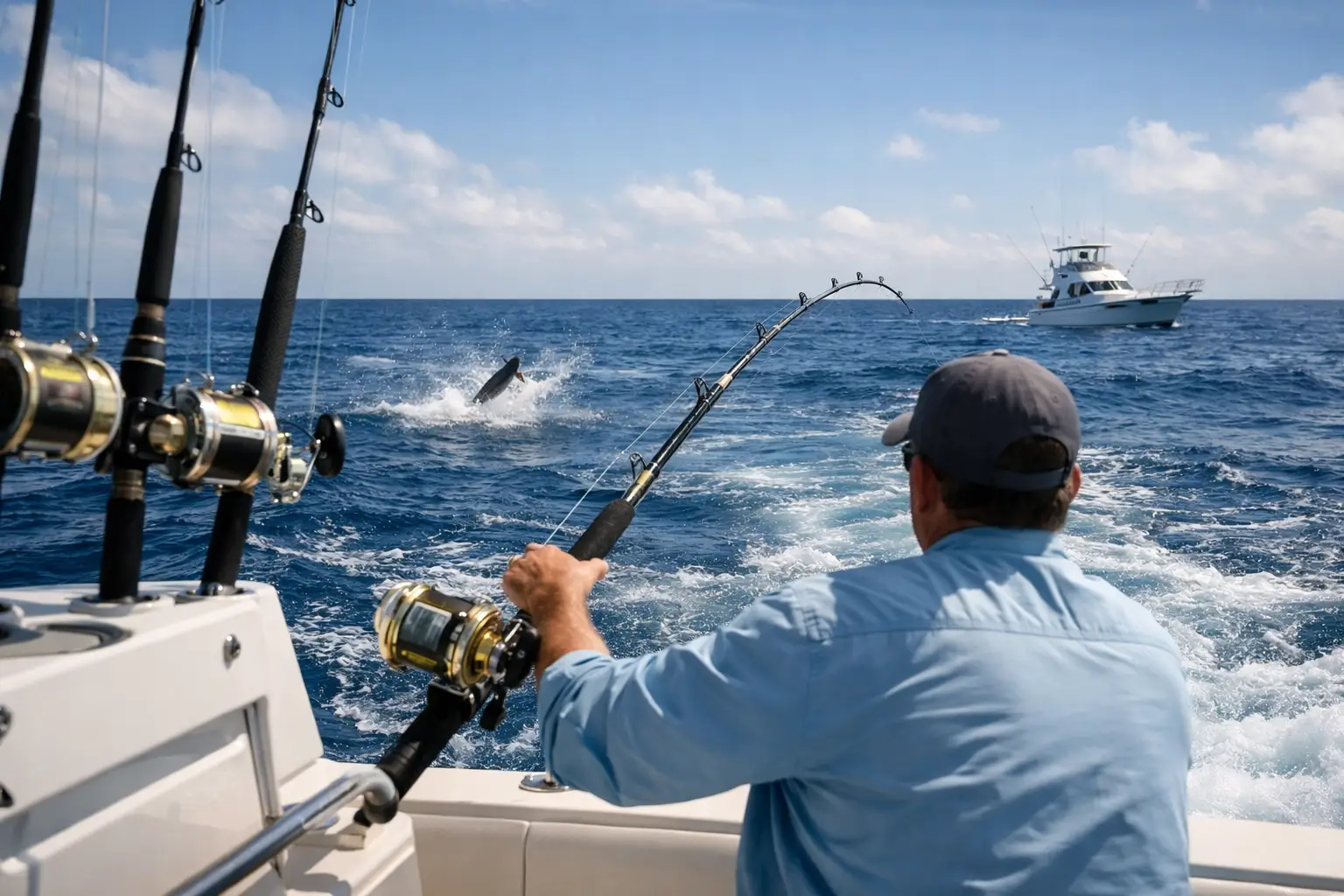
A deep sea fishing trip starts long before the first line hits the water. If you have ever wondered how does deep sea fishing work, the short answer is simple: an experienced captain takes your private boat beyond the nearshore waters, reads conditions, targets the right species, and manages the gear so you can focus on the experience instead of the logistics.
That matters more than most travelers expect. Offshore fishing is not just about heading far out and hoping for the best. It is a coordinated experience built around timing, weather, water depth, bait, tackle, local fish patterns, and the skill of the crew. When it is done well, it feels smooth, comfortable, and exciting from the moment you leave the marina.
How does deep sea fishing work offshore?
Deep sea fishing usually means fishing in deeper offshore waters rather than along the beach, flats, or reef edge. In places like Cancun and the Riviera Maya, that often means the boat heads out to blue water where larger sport fish are more active. Depending on the season, that can include mahi-mahi, sailfish, marlin, tuna, wahoo, and other prized catches.
The captain does not choose a random spot. He studies sea conditions, recent activity, current lines, water temperature, bird movement, and structure beneath the surface. Some days the fish are feeding closer in. Other days, the boat may run farther offshore to find better action. This is one reason private charters are so appealing – the trip can adapt to the conditions instead of forcing everyone into a fixed group-tour route.
Once the boat reaches the target area, the crew sets the spread. That means preparing multiple lines with different lures or bait presentations at different distances behind the boat. In many offshore trips, trolling is the main technique. The boat moves at a controlled speed while the lures skim and dart through the water to imitate prey. When a fish strikes, the reel screams, the crew responds quickly, and the angler is guided through the fight.
What actually happens on the boat
For first-time guests, the biggest surprise is how much the crew handles. You do not need to arrive knowing knots, rigging, or marine electronics. On a professionally operated trip, the captain and mates take care of the technical side while keeping you informed and involved.
Before departure, there is usually a quick safety and trip briefing. You will learn where to sit, where personal items should go, and what to expect once the boat picks up speed offshore. After that, the crew gets the tackle ready, sets lines, monitors rods, watches the sonar and surface activity, and adjusts the plan as needed.
Your role can be as hands-on or relaxed as you want. Some guests want to hold the rod the moment a line goes off and fight every fish possible. Others want a more leisure-forward day with drinks, photos, ocean views, and a few turns on the reel. On a private charter, that flexibility is part of the value. The experience can feel sporty, family-friendly, celebratory, or somewhere in between.
The gear makes a difference, but the crew matters more
Yes, deep sea fishing uses serious equipment. Offshore rods and reels are heavier than what most people have used from a pier or small inshore boat. They are designed to handle fast, powerful fish and long runs. Depending on the target species, the setup may include outriggers, heavy test line, fighting belts, teasers, live bait rigs, and specialized lures.
Still, gear alone does not create a great trip. Offshore fishing is one of those experiences where local knowledge matters just as much as the hardware. A seasoned crew knows how fish move through the area, how weather changes the bite, and when to switch speed, bait, or location. That is why one boat can have a slow day while another nearby is getting consistent strikes.
For guests booking a premium experience, this is where quality control matters. A vetted operator, a capable captain, and responsive trip planning can make the difference between an average outing and the kind of day people talk about for the rest of their vacation.
How long should a deep sea fishing trip be?
It depends on what you want from the day. A shorter trip can be a good fit for beginners, families with younger children, or travelers fitting fishing into a larger vacation schedule. You still get the offshore experience, but there is less time to run far, test multiple areas, or wait out slower conditions.
A longer trip gives the captain more room to work. There is more time to reach productive water, change tactics, and pursue larger pelagic species. If fishing is a priority rather than a casual add-on, longer charters usually offer a better overall opportunity. Not a guarantee – fishing never works that way – but more time generally means more flexibility.
For luxury travelers, there is also a comfort factor. On a well-planned private trip, a longer day does not have to feel demanding. With the right boat, attentive crew, and smooth logistics, it can feel like a premium ocean experience with the bonus of real sport fishing.
What can you catch in Cancun and the Riviera Maya?
This is one of the first questions guests ask, and the honest answer is seasonal. Offshore species shift throughout the year, so no reputable operator should promise the same catch list every month. That said, the Mexican Caribbean is known for excellent sport fishing opportunities.
Billfish such as sailfish and marlin are major draws for serious anglers and curious first-timers alike. Mahi-mahi are popular because they are colorful, strong, and exciting to catch. Tuna and wahoo add another layer of challenge and can turn a good day into a memorable one very quickly.
The best crew will explain what is realistic for your travel dates instead of overselling. That kind of transparency matters. It sets the right expectations and helps match your trip length, departure point, and style of outing to the season.
Is deep sea fishing hard for beginners?
Not in the way many people fear. It can be physically demanding once a strong fish is on the line, but the process itself is beginner-friendly when you are on the right boat with the right team. The crew shows you how to stand, hold the rod, manage tension, and bring the fish in without feeling overwhelmed.
There is a difference, though, between beginner-friendly and effortless. Big offshore fish fight hard. Some runs are fast and dramatic. Some are long and tiring. If your group includes children, older adults, or guests who mainly want a relaxed luxury outing, it helps to say that upfront during booking. The trip can often be tailored around your pace and priorities.
That is one reason personalized planning matters so much. A private fishing charter should fit your vacation, not force your vacation to fit the charter.
What to expect from the full experience
The best offshore trips feel easy because someone has already done the hard part. Transportation, departure timing, vessel quality, crew standards, and onboard comfort all shape the day. For many travelers, the stress is not the fishing itself. It is figuring out who to trust, how to get there, what kind of boat they are actually booking, and whether the experience will match the photos.
That is where a concierge-style approach stands out. With a company like VIP Cancun Yachts, guests are not left piecing together marina details, transportation, and operator quality on their own. The goal is simple: protect your vacation time, provide a vetted experience, and make the day feel elevated from pickup to return.
For celebratory groups, couples, and families, this matters just as much as the fish count. A deep sea fishing day can be adventurous and refined at the same time. Cold drinks, private space, attentive support, and a professional crew change the tone of the outing entirely.
How does deep sea fishing work when conditions change?
This is where experience shows. Offshore conditions are never static. Wind, current, visibility, bait movement, and weather windows can shift within hours. A good captain adjusts. That may mean changing trolling patterns, moving to a different depth range, slowing the spread, or chasing a cleaner water line.
Sometimes the trade-off is between comfort and range. On rougher days, going very far offshore may not be ideal for every group, even if the bite could be better there. On calmer days, the captain has more freedom to run farther and explore. The right decision depends on your group, your goals, and the actual conditions that day.
That is also why deep sea fishing should always be approached with realistic expectations. It is a real ocean experience, not a staged attraction. The excitement comes from that unpredictability. When the reel starts screaming and everyone rushes to the cockpit, you feel exactly why people get hooked on offshore fishing after just one trip.
If you are considering it for your Cancun vacation, think of deep sea fishing less as a technical sport you need to master and more as a guided private experience built around expertise, timing, and comfort. The right crew takes care of the work. You get the ocean, the adrenaline, and the kind of day that still feels special long after you are back onshore.